

Ceilidh Band
Fergus plays with the Caulbums Ceilidh Band and has recently played at Burns and St Andrew’s Nights in Rome and Barcelona as well as weddings in Spain and Italy, and at a series of concerts in Santa Domingo in the Caribbean. The Caulbums are an exciting mix of pipes, whistles, accordion and voices and do a great job of getting audiences up on their feet to enjoy great nights of traditional Scottish dancing.
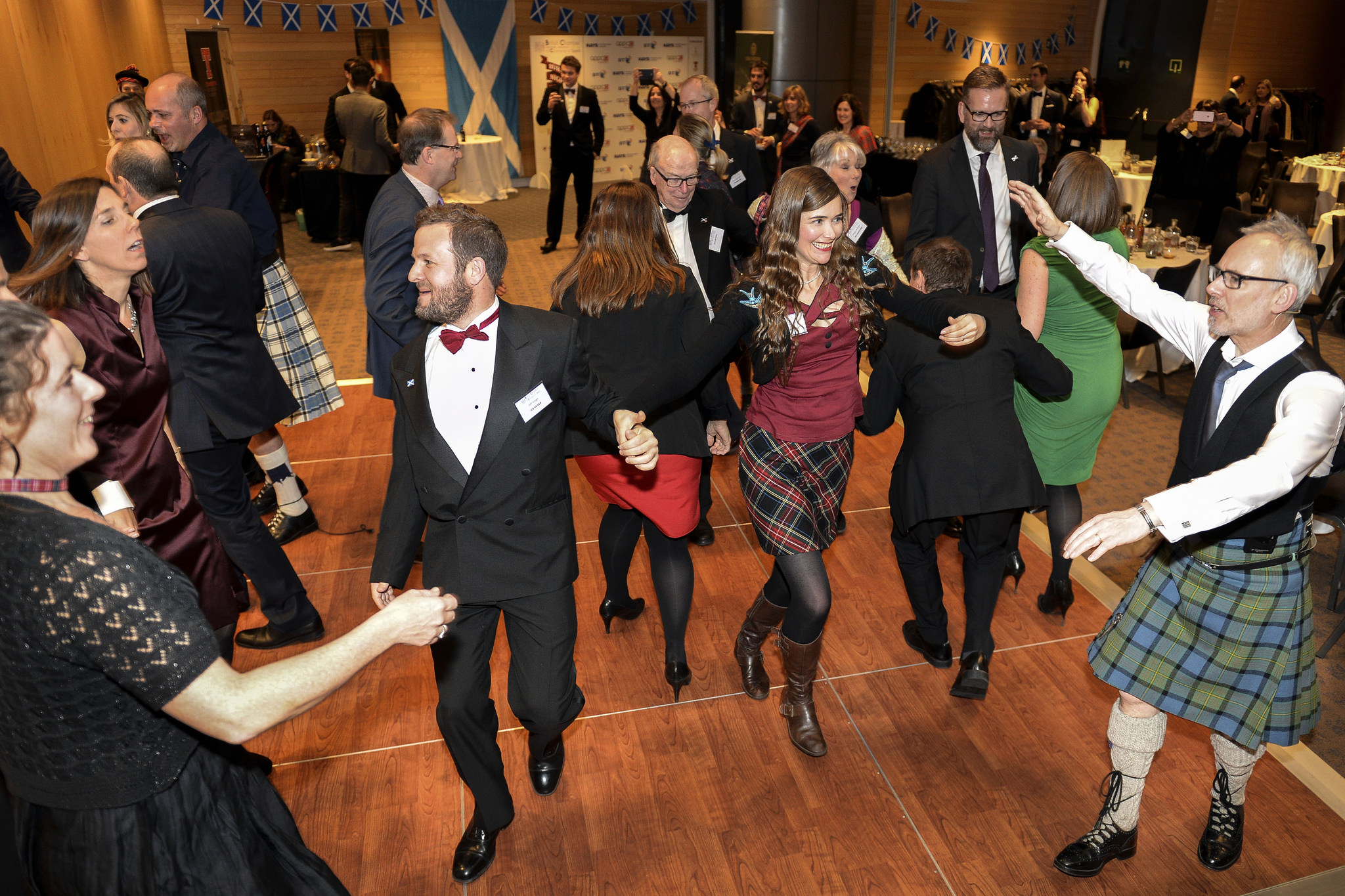


On the left a ceilidh at Abertay University in Dundee and on the right A Burn’s night at Gatwick Airport.
Closer to home they are regulars at Ceilidhs up and down the country with their exciting mix of pipes, accordion, fiddle and whistle. They are also experts in talking dancers through new dances and keeping them on the floor all night!
They would be a wonderful band to have at your wedding if you are looking for a Scottish themed evening. Frazer MacLellan is an expert dance caller while Fergus and John Gahagan will lead by example to ensure that all of your guests are up on the floor enjoying themselves for as much of the night as possible.
Testimonial
“My daughter Alice has always been a fan of a wide range of music but when she said she wanted a traditional band to provide the music for her 18th birthday I was a little concerned that the event might turn out to be a bit of a damp squib. I have been to plenty of “traditional” events in the past and it takes a good band who really know their stuff and who not only have great musicality but a real sense for the room and the folk who have attended to make it all work.
My main concern had been that so many guests were coming from England and they might be lost with all the traditional dancing. There was also a lot of trendy cool types who might have looked down their noses at such a traditional sound but there was no need to worry as Fergus and Frazer stepped in and played a blinder. Everyone joined in the dancing and the comments afterwards were terrific. For the majority of people at the ceilidh it was their first time at such an event so they needed the gentle and friendly inspiration from the players who talked them through the steps and kept everyone right. They even managed to keep me right till the free bar got the better of me. If you are looking for a couple of consummate professionals who know how to keep it friendly and deliver a great night for all then get in touch with Fergus and Frazer.”
Graham Walker, Glasgow Solicitor
“We were lucky enough to have Fergus speak and play at our Burns’ Supper in Spain with a very international audience. Fergus and the fantastic accordionist Frazer Mclellan simply MADE the evening. Fergus’ friendly and easy going personality meant that the organization of the event was very straightforward and he was a goldmine of advice on Burns and Burns’ suppers. He delighted the crowd with his piping and his Tam O’Shanter was an unforgettable performance! Complete novices and old-hand ceilidh dancers were soon reeling around our hall thanks to Fergus’ excellent instruction and encouragement and the dancefloor was full from beginning to end. Fergus’ natural warmth and wit made him a pleasure to work with and he will be top of my list for any Burns’ Supper or other events in the future.”
Squadron Leader Andy Barber, RAF.
Fergus has helped me out at a number of events at Abertay and Queen Margaret Unions. This has included Burns Suppers, Graduation Balls, President’s Dinner and Ball and Solo Piping. He even put a band together for us for St Patrick’s Day. He is an excellent piper and speaker and he did a brilliant job as caller and dance demonstrator with our timid international students to create an enjoyable and memorable night for all. I am more than pleased to recommend him to anyone looking for a great night.
Bill Blackstock
General Manager
Queen Margaret Union.